SDG 5 5.6.7 | TASHKENT STATE UNIVERSITY OF LAW Tracking graduation and equity statistics, 2023–2026 |

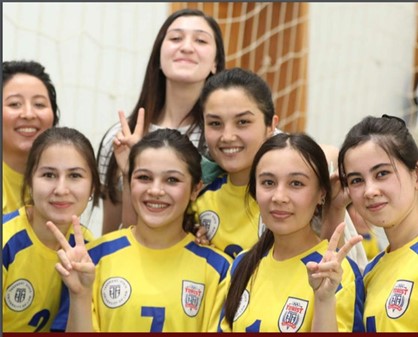
Photo 1. TSUL female students.
■1. How TSUL tracks equity
| Instrument | Requirement |
|---|---|
| Order No. 08-242 (11 Dec 2020), items 9–10 | Gender statistics across all areas of university life; monthly report to the Rector |
| Order No. 08-242, basic directions, para. 5 | Target of 50% women among students recommended for admission |
| Admissions & Access Policy, clause 7.1 | Gender-impact reports on the participation of women and men |
| National graduate-employment monitoring system | Employment and further study of each graduating cohort |
■2. Admission data, 2026/27
| Applicants recommended for admission | Number | Share |
|---|---|---|
| Women | 1,329 | 46.0% |
| Men | 1,560 | 54.0% |
| Total | 2,889 | 100% |

Figure 2. Women and men recommended for admission in 2026/27, against TSUL's 50% target. Source: TSUL Admissions Committee (internal).
■3. Student population, 2025/26
Residence halls. Of the 1,121 students housed in TSUL's three residence halls in 2025/26, 519 were women (46.3%) and 602 men (53.7%). Priority groups housed included 40 students with disabilities, 69 orphans and students deprived of parental care, and 116 students on the "Women's Register".

Figure 3. Students in TSUL residence halls by gender, 2025/26. Source: TSUL residence-hall data (internal); shares calculated.
| Priority group housed in the halls, 2025/26 | Students |
|---|---|
| Students from families on the Unified Social Protection Register and the "Low-Income Families Register" | 187 |
| Students on the "Women's Register" | 116 |
| Students on the "Youth Register" | 98 |
| Orphans and students deprived of parental care | 69 |
| Students with disabilities | 40 |
Students with disabilities. Under Council Minutes No. 22 of 11 August 2025, students with Group I or II visual disability are fully exempt from residence-hall fees and students with Group I or II disability are 50% exempt.
International students. In 2026/27, 30 international students from 8 countries are admitted to the full-time bachelor's programme in Jurisprudence: Azerbaijan, Tajikistan, Russia, Kazakhstan, the Kyrgyz Republic, Israel, Bangladesh and Nigeria. Teaching is offered in Uzbek, Russian and English.
■4. Graduation data
| Academic year | Graduates | Source |
|---|---|---|
| 2023/24 | 1,485 | TSUL, 26 July 2024 |
| 2025/26 | 2,148 | National graduate-employment monitoring system (internal) |

Figure 4. TSUL graduates by academic year.
| Faculty, 2023/24 | Graduates |
|---|---|
| Public Law | 318 |
| Criminal Justice | 443 |
| Private Law | 312 |
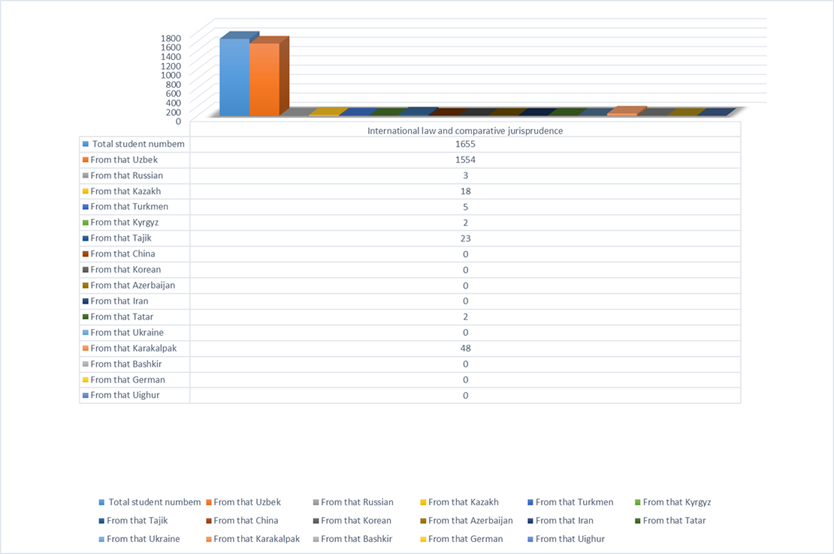
| International Law and Comparative Legislation | 355 |
The faculty figures add up to 1,428; the published total of 1,485 may include graduates of other programmes. In addition, 86 graduates of joint programmes with KAZGYU University and Grodno State University received diplomas.

Figure 5. TSUL graduates by faculty, 2023/24.
After graduation, 2025/26. Of the 2,148 graduates, 1,188 (55.3%) were employed or continuing their studies according to the national monitoring system. The monitoring separately records graduates caring for children under two and graduates with disabilities, so that these groups are not counted as unemployed.
■5. Women in leadership, 2025
| Leadership level | Leaders and deputies | Women | Share |
|---|---|---|---|
| University level | 5 | 1 | 20.0% |
| Faculties, schools and research centres | 30 | 15 | 50.0% |
| Study programmes | 68 | 36 | 52.9% |
| University-level units | 22 | 12 | 54.5% |
| Total | 125 | 64 | 51.2% |

Figure 6. Women among TSUL leaders and deputies by level, 2025. Source: TSUL (internal).
■6. Schemes that help women complete their studies
■"Mother and Child" rooms in Buildings 2, 3 and 4, so that student mothers can study and sit examinations;
■Free mentoring courses for female students on gender equality, rights and leadership;
■Khadicha Sulaymonova Scholarship: 1.5 times the basic scholarship for 10 months;
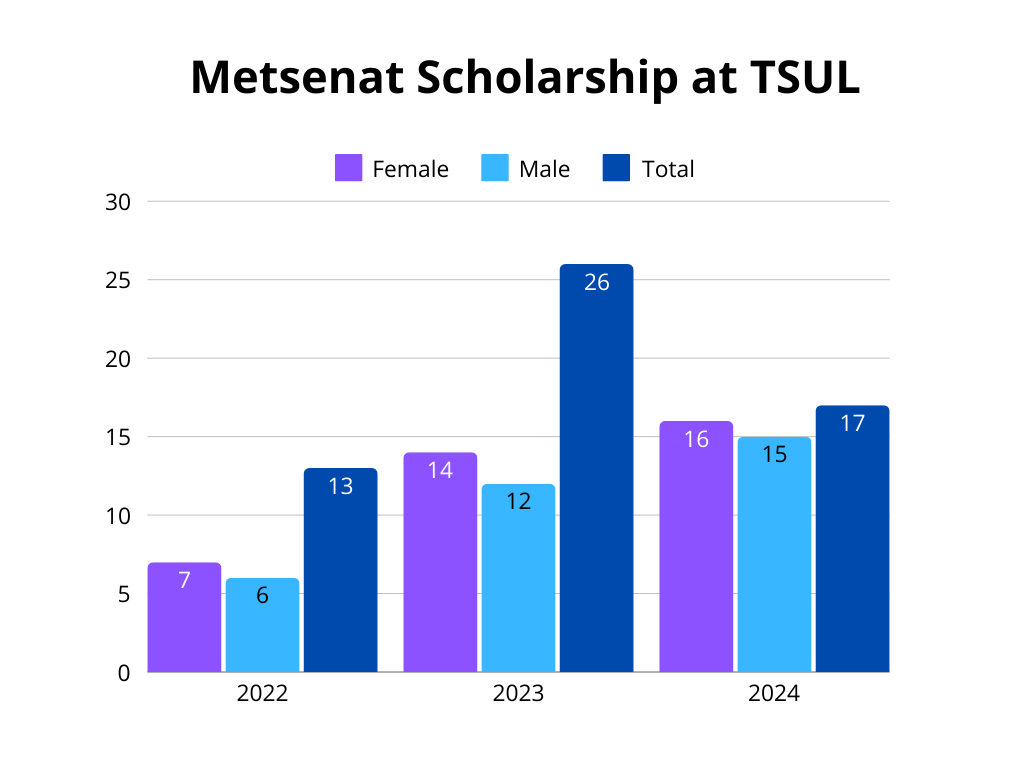
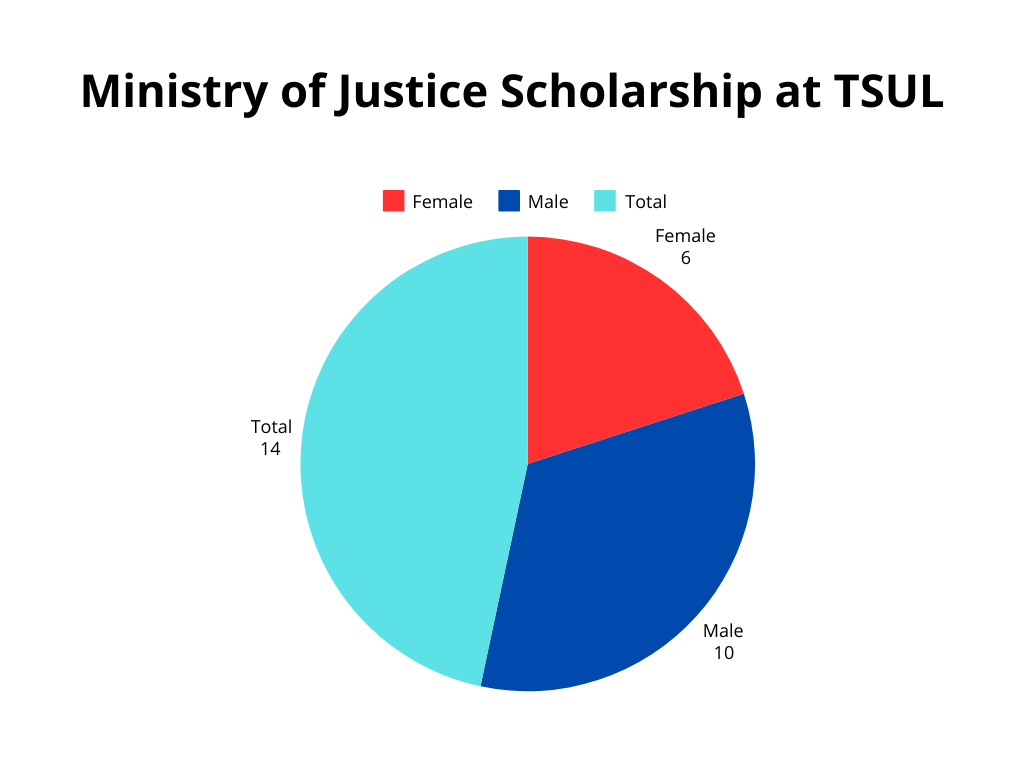
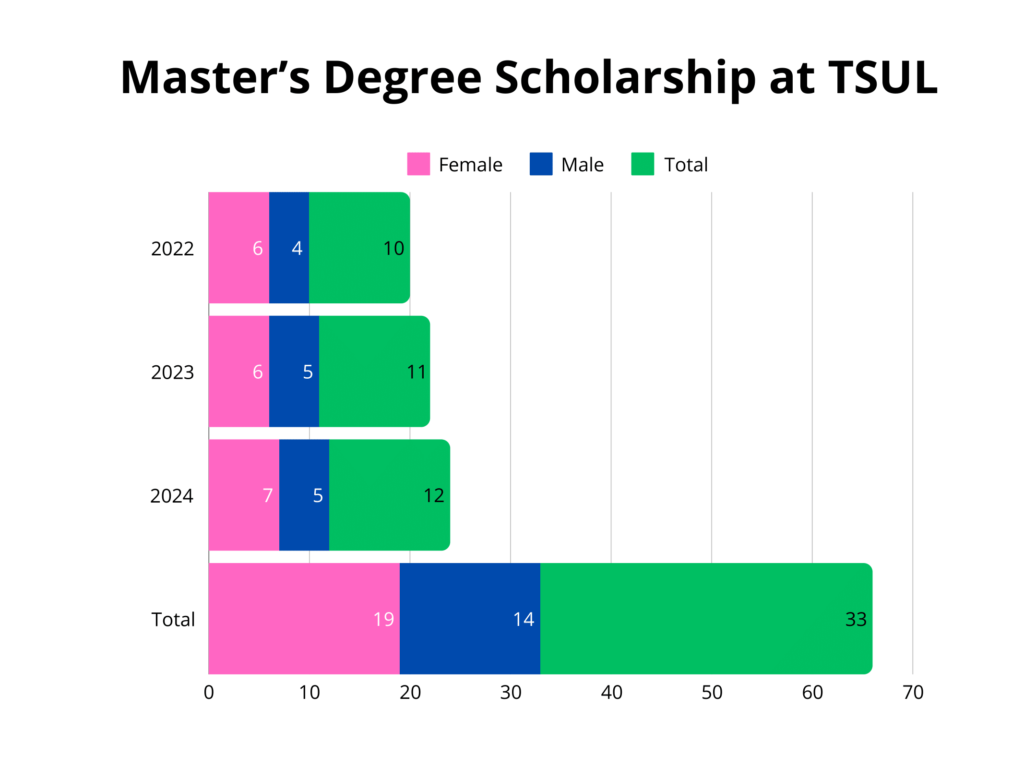
■Ministry of Justice and TSUL scholarships, 67% of whose winners are female students (TSUL);
■Residence-hall priority for students on the "Women's Register" (116 in 2025/26).
Result. TSUL ranked 51st in the world for SDG 5 in the THE Impact Rankings 2025. TSUL
Sources: Rector's Order No. 08-242; Admissions & Access Policy; TSUL Admissions Committee 2026 (internal); residence-hall data 2025/26 and Council Minutes No. 22 (internal); graduate-employment monitoring 2025/26 (internal); TSUL graduation 2024; TSUL: Scholarships; TSUL: THE 2025.